Business outcomes · Private equity AI
Modernize Legacy Private Equity-Backed Businesses with AI
An established private equity holding may have attractive economics but older systems that make scaling difficult. We improve selected workflows through feasible interfaces or controlled processes with management before proposing replacement, weighing continuity, cost and the remaining holding-period priorities.
Reduce dependence on fragile manual work and create a manageable modernization path. Benefits depend on data readiness, technical feasibility, and adoption rather than wholesale replacement.
Discuss modernize legacy businesses with ai. Request an introductory conversation with our team.
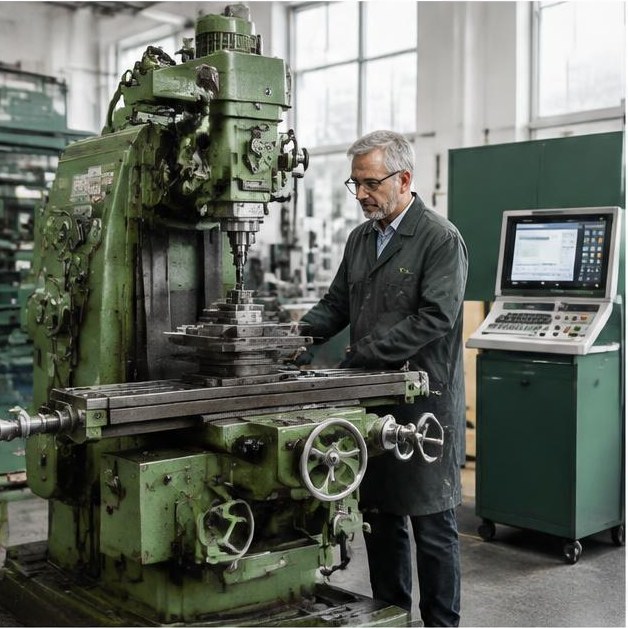
- 01
Employees rely on undocumented workarounds.
- 02
Controlled reporting bridge
- 03
Owner review
- 04
Bounded releases improve work without assuming immediate replacement.
The private equity investment case
Can AI help when our core system has no modern API?
A legacy business does not need to replace every system before improving operations. We identify practical access options, document tacit rules, and build limited improvements around existing software while making constraints and support responsibilities explicit.
Possibly. Approved exports, reporting databases, or other supported access may enable read-oriented assistance. Screen-based automation is considered cautiously because interface changes, permissions, and recovery risks can make it unsuitable.
- A focused first project
- Incremental workflow modernization with explicit technical constraints.
- Who we work with
- CEO or COO, with IT leadership, long-serving process experts, and application support owners.
The problem
Where the investment thesis meets operational friction
Essential process knowledge sits with a few employees.
Spreadsheets bridge gaps without clear controls or ownership.
A full system replacement is costly and disruptive.
What we build with your team
Modernize Legacy Businesses with AI
Controlled reporting bridge
Use approved exports to prepare reconciled operational reporting without changing the core application.
Procedure capture
Document specialist knowledge and publish reviewed guidance for repeatable administrative tasks.
Staged intake modernization
Introduce structured request capture and validation while retaining approved entry into the legacy system.
Example workflow
Before and after
Today
Employees rely on undocumented workarounds.
Data is moved through uncontrolled spreadsheet versions.
Replacement debates delay smaller practical improvements.
With Agentic Factory
Process experts validate documented rules and exceptions.
Approved data bridges include reconciliation and ownership.
Bounded releases improve work without assuming immediate replacement.
Systems and access
- Legacy application documentation, licensing, and supported access methods.
- Approved exports, reporting views, and controlled spreadsheets.
- Identity controls, backups, and operational support procedures.
Human approval
- IT owners approve access methods, operational risk, and recovery plans.
- Process experts approve captured rules and changes to established workflows.
Metrics to track
- Manual handling and reconciliation effort.
- Errors associated with spreadsheet or rekeying steps.
- Adoption, support incidents, and reliance on undocumented procedures.
Our process
From opportunity to measured result
Assess legacy constraints, critical dependencies, and undocumented work, then prioritize a low-disruption improvement. Build controlled data access and explicit process rules before adding AI assistance. Integrate through supported methods and test reconciliations and fallback procedures. Launch alongside existing operations with named support owners. Measure handling effort, errors, and adoption before deciding whether further modernization or replacement is justified.
- 01
Assess
- 02
Prioritize
- 03
Build
- 04
Integrate
- 05
Launch
- 06
Measure
Start with your workflow, system constraints and value creation priorities.
Questions
Modernize Legacy Private Equity-Backed Businesses with AI: FAQs
Must we replace our ERP first?+
Not necessarily. Discovery identifies improvements that are feasible within current systems and highlights limitations that may require replacement.
Can you automate screen interactions?+
Sometimes, subject to permission and feasibility, but supported interfaces are preferred and fragile interactions need careful monitoring.
What if our data is inconsistent?+
Begin with profiling, ownership, and targeted cleanup rather than relying on AI to conceal unreliable records.
How do you protect business continuity?+
Use staged deployment, reconciliations, fallback procedures, and operational approval before changing critical processes.
Will this delay necessary system replacement?+
It should not. Separate useful interim improvements from investments that depend on an eventual replacement decision.
Related private equity AI services
Explore all private equity servicesImprove EBITDA with AI for Private Equity Portfolio Companies
Business outcomesReduce Operating Costs with AI for Private Equity-Backed Companies
Business outcomesScale Operations with AI for Private Equity-Backed Companies
Private equityAI Opportunity Assessment for Private Equity-Backed Companies
Put a real workflow on the table.
Discuss modernize legacy businesses with ai. We’ll discuss fit, priorities and a sensible first scope.